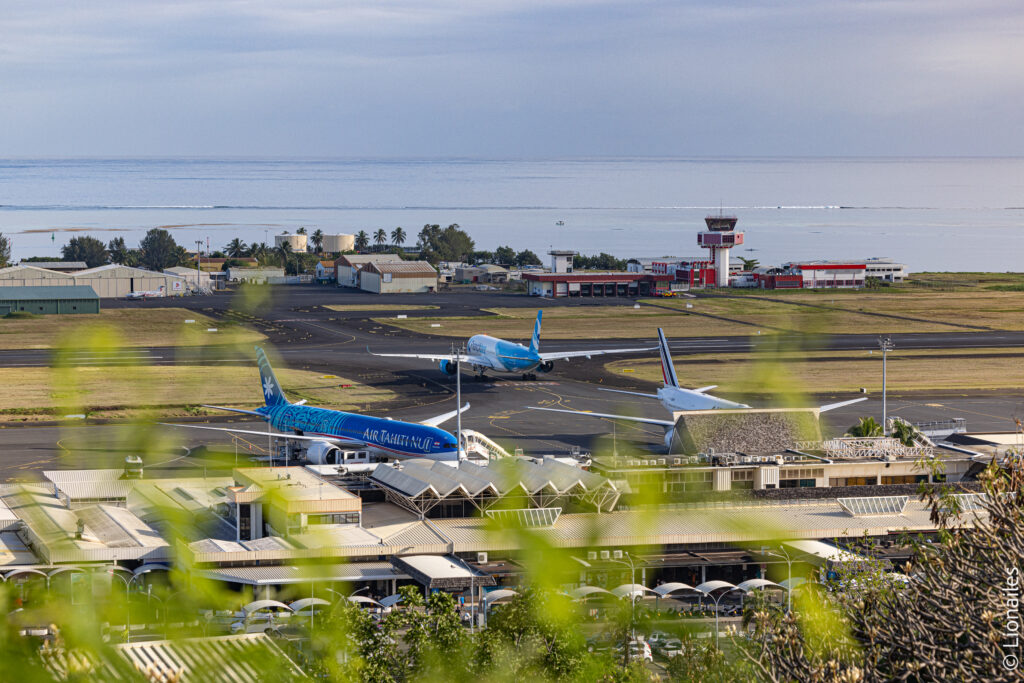
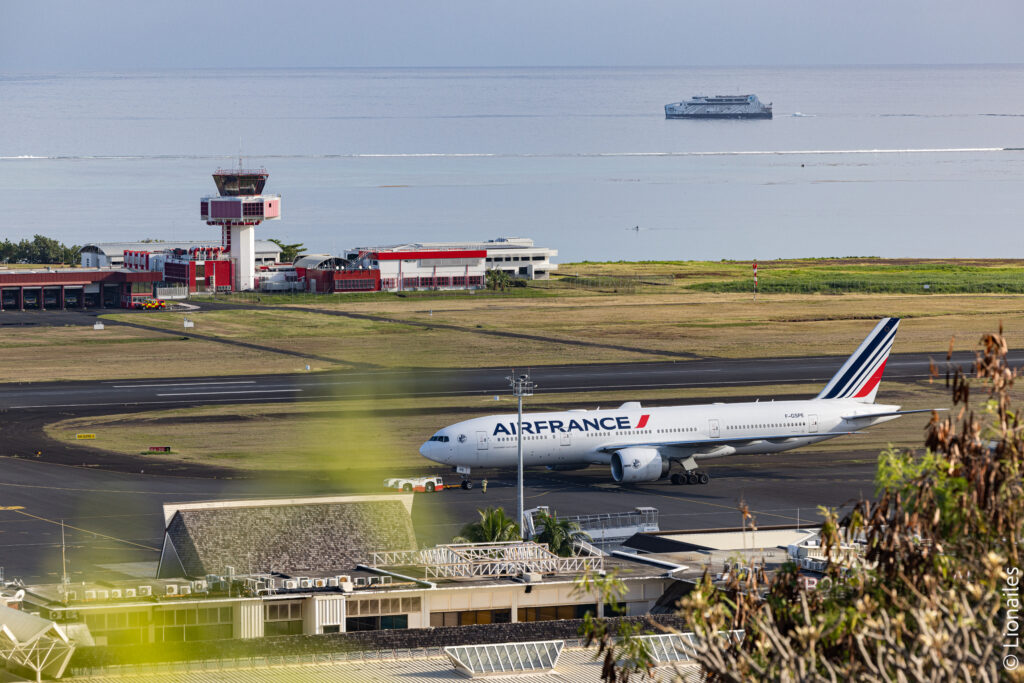
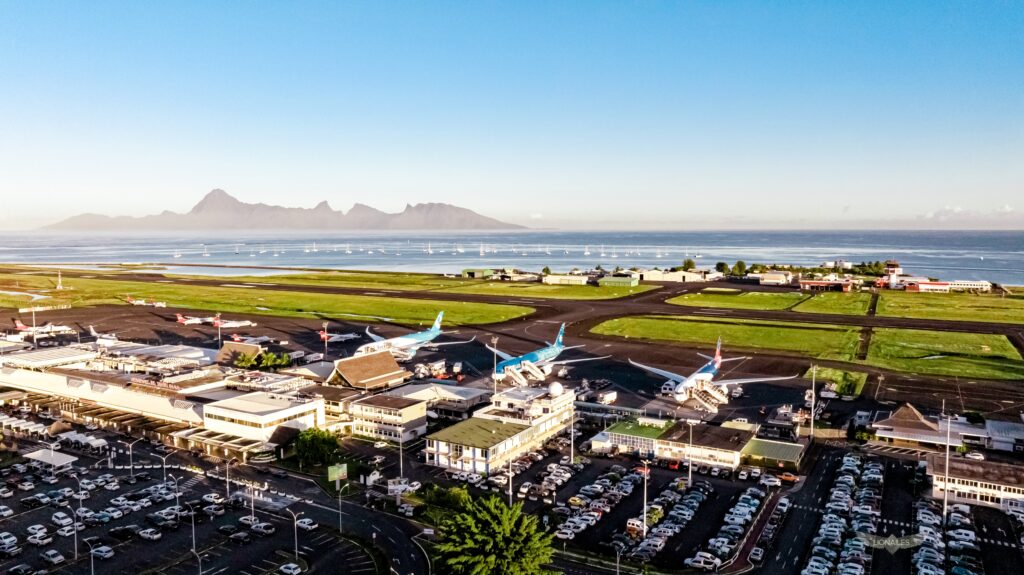
Aéroport International de Tahiti-Faa'a
The famous “Coral Route”. This trans-Pacific air route operated by the TEAL company allowed travelers to reach New Zealand from Tahiti via Fiji, Samoa, and the Cook Islands.
In addition to TEAL’s monthly service, foreign travelers had to be loaded in Bora Bora to reach Tahiti, the only airstrip in the Territory built in 1942 by the United States to accommodate its troops after entering the war against Japan following the attack on Pearl Harbor.
The construction of Tahiti-Faa’a Airport was decided in Paris on May 15, 1957, and recognized as being of public interest the following year.
At the time, the construction of an airport in Tahiti was seen as the solution to various problems, including:
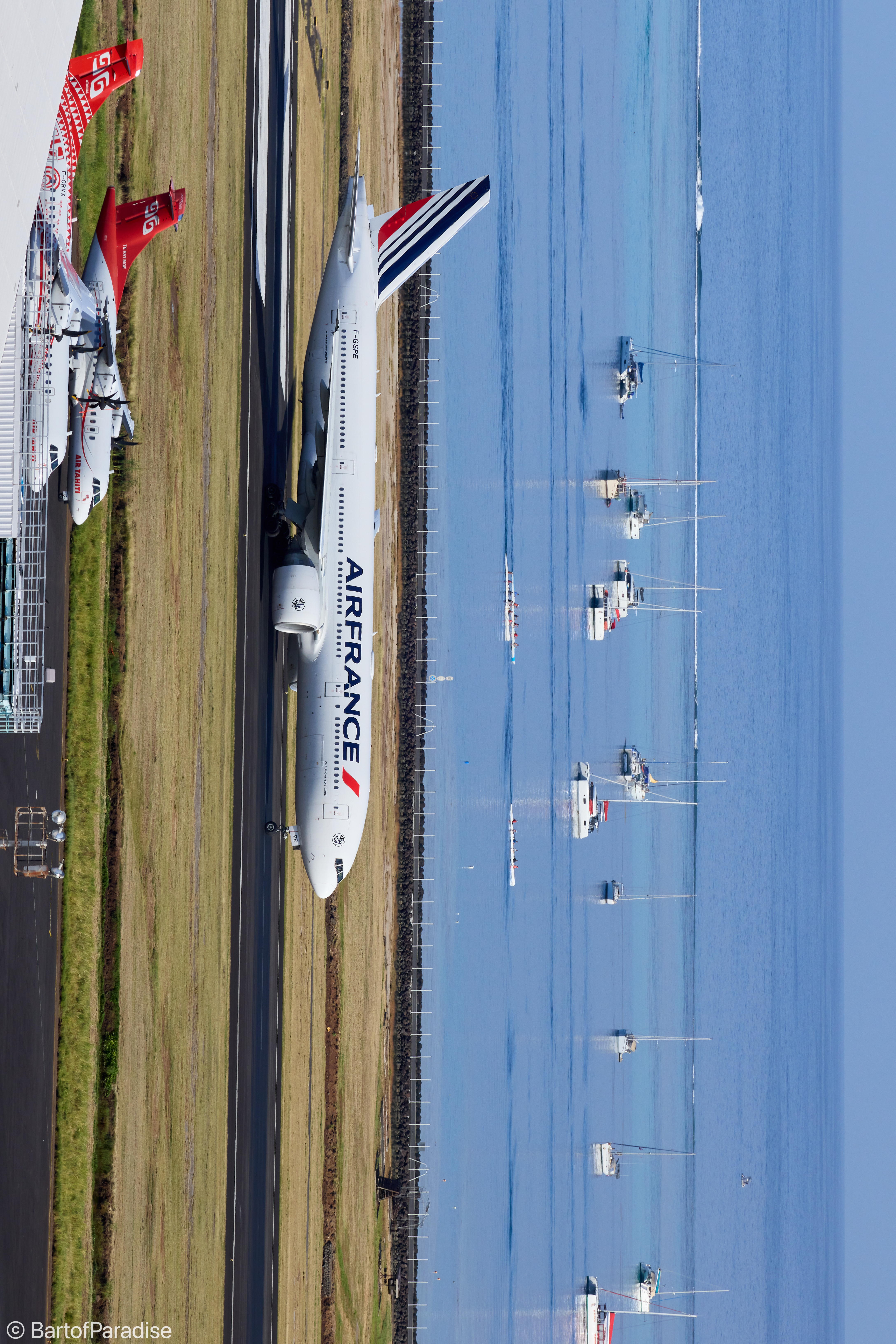
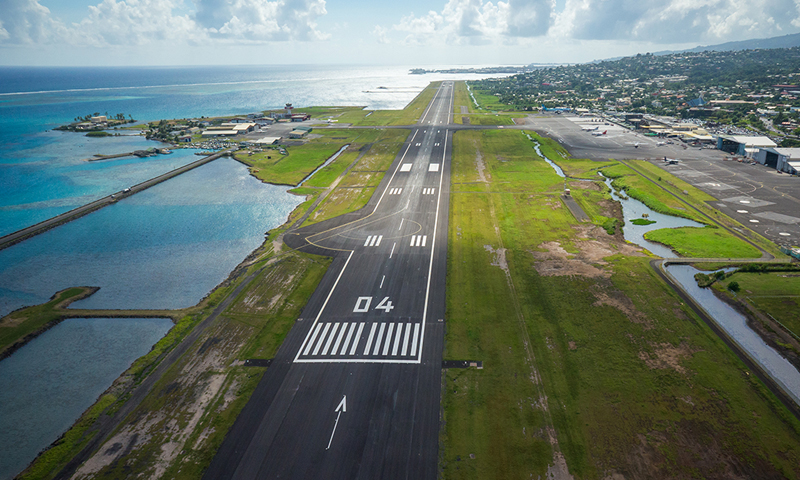
Construction began in 1959 by building an embankment in the lagoon area of Faa’a where a seaplane base existed on Motu Tahiri. The project was carried out under the responsibility of the French Dredging and Public Works Company, which had just built the runway in Hong Kong over the ocean.
Two years and 43,000 m3 were needed for this titanic construction project, which took shape between the shore and Motu Tahiri.
The first part of the runway, 2000 meters long and 150 meters wide, was completed in 1960. The runway opened to commercial air traffic at that time, but work continued for six months to extend the runway to 3416 meters to accommodate jets serving Tahiti.
The year 1960 marked a turning point in the history of aviation in French Polynesia and the beginning of a new era: the era of tourism.
To this day, Tahiti-Faa’a Airport is the only international airport in French Polynesia, which encompasses 118 islands spread over an area equal to that of Europe.
It plays a strategic role in ensuring connectivity among the populations of French Polynesia as well as the connectivity of the territory with the rest of the world.
Today, it serves around ten international destinations spread across Europe, North America, Asia, and Oceania.
Tahiti-Faa’a Airport is managed under a concession agreement at the risk and peril of the concessionaire. This concession is currently being reattributed by the State.
Its management was granted by the State to Aéroport De Tahiti (ADT) in 2010, which has invested nearly 8 billion CFP francs in upgrading airport facilities.
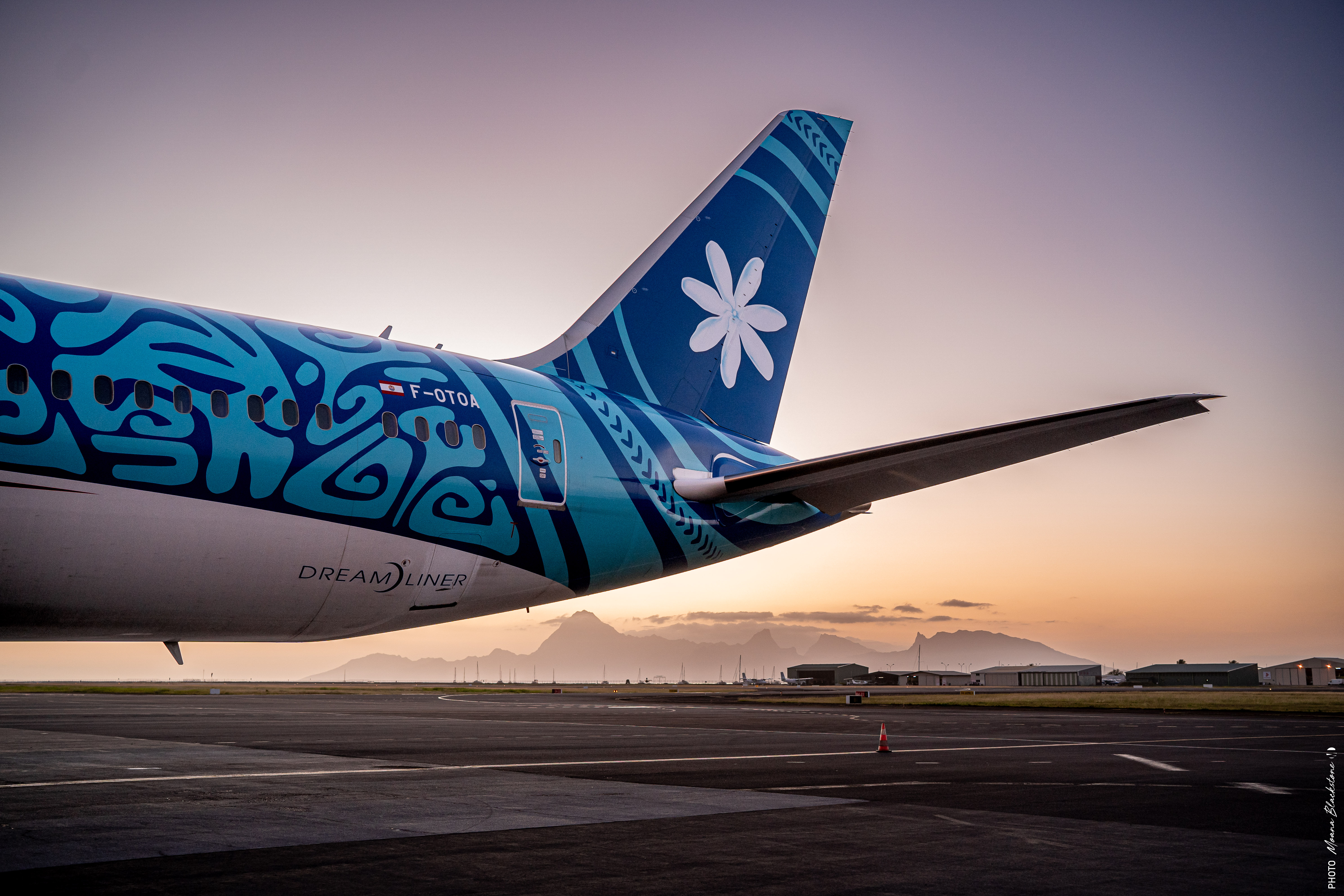
Tahiti-Faa’a Airport is the primary hub of the leading airline, Air Tahiti Nui (ATN), which holds a 42% market share of international air traffic.
The domestic air network comprises 46 territorial airports, one military airport (Moruroa), in addition to 4 private aerodromes.
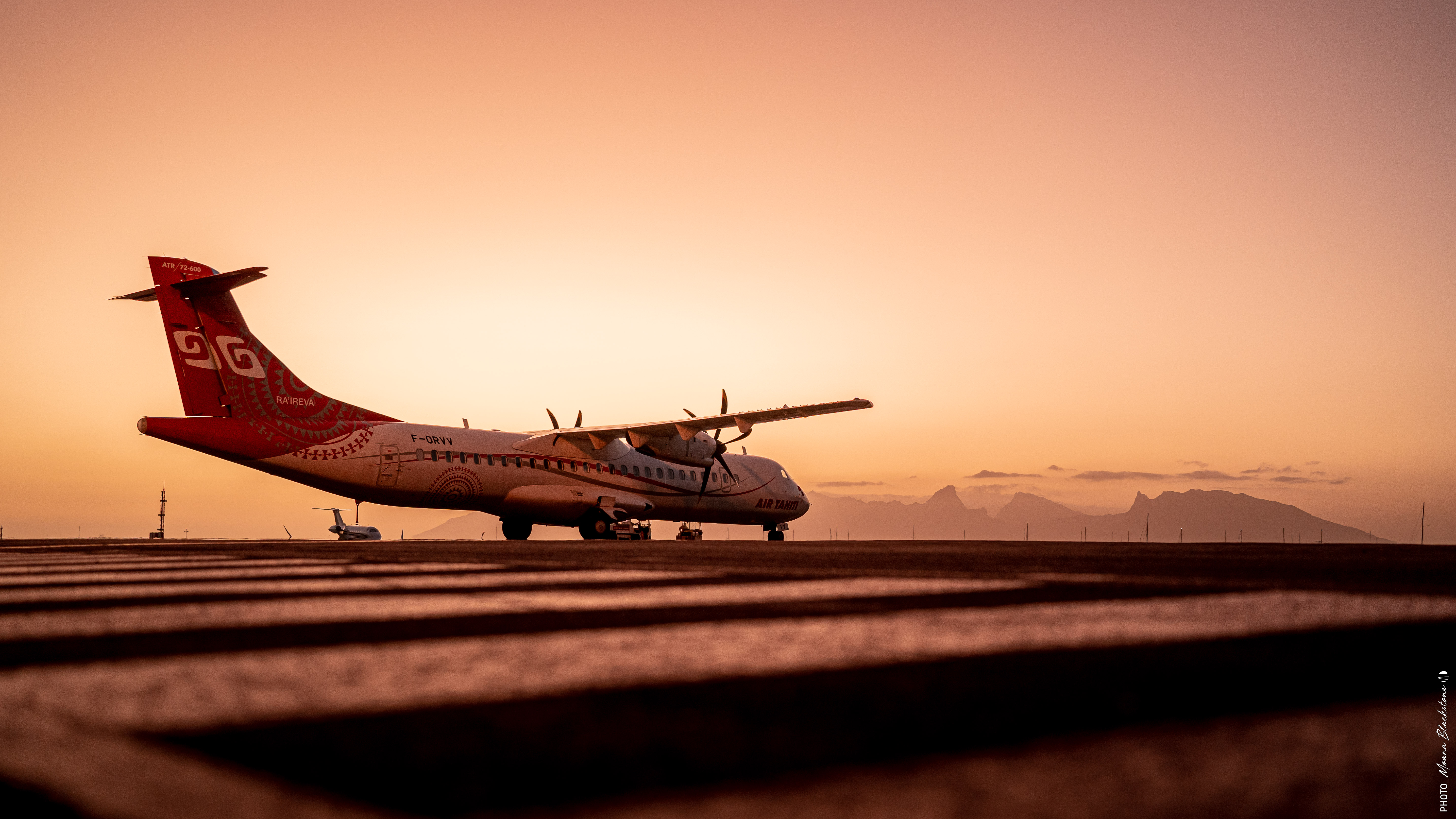
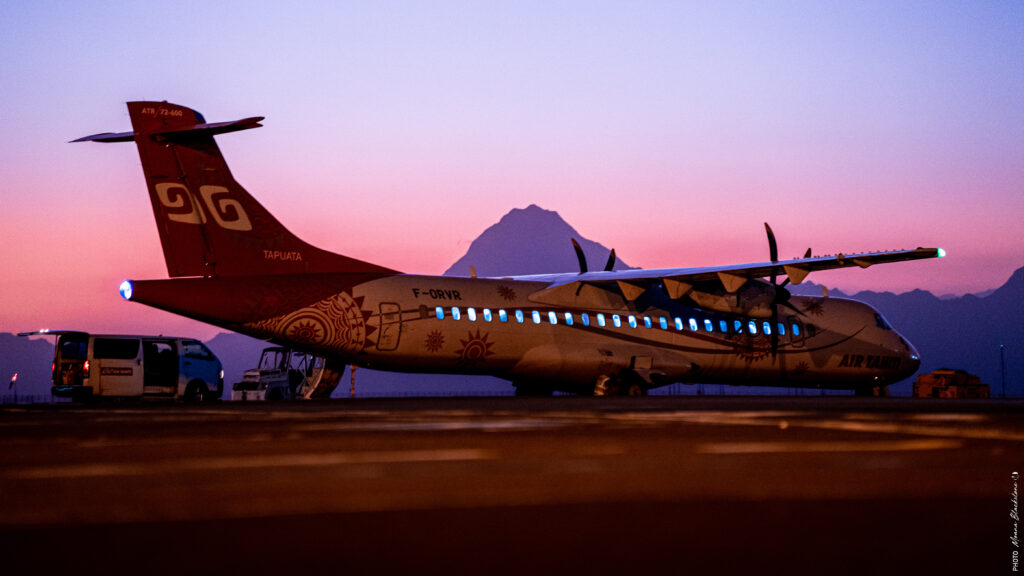
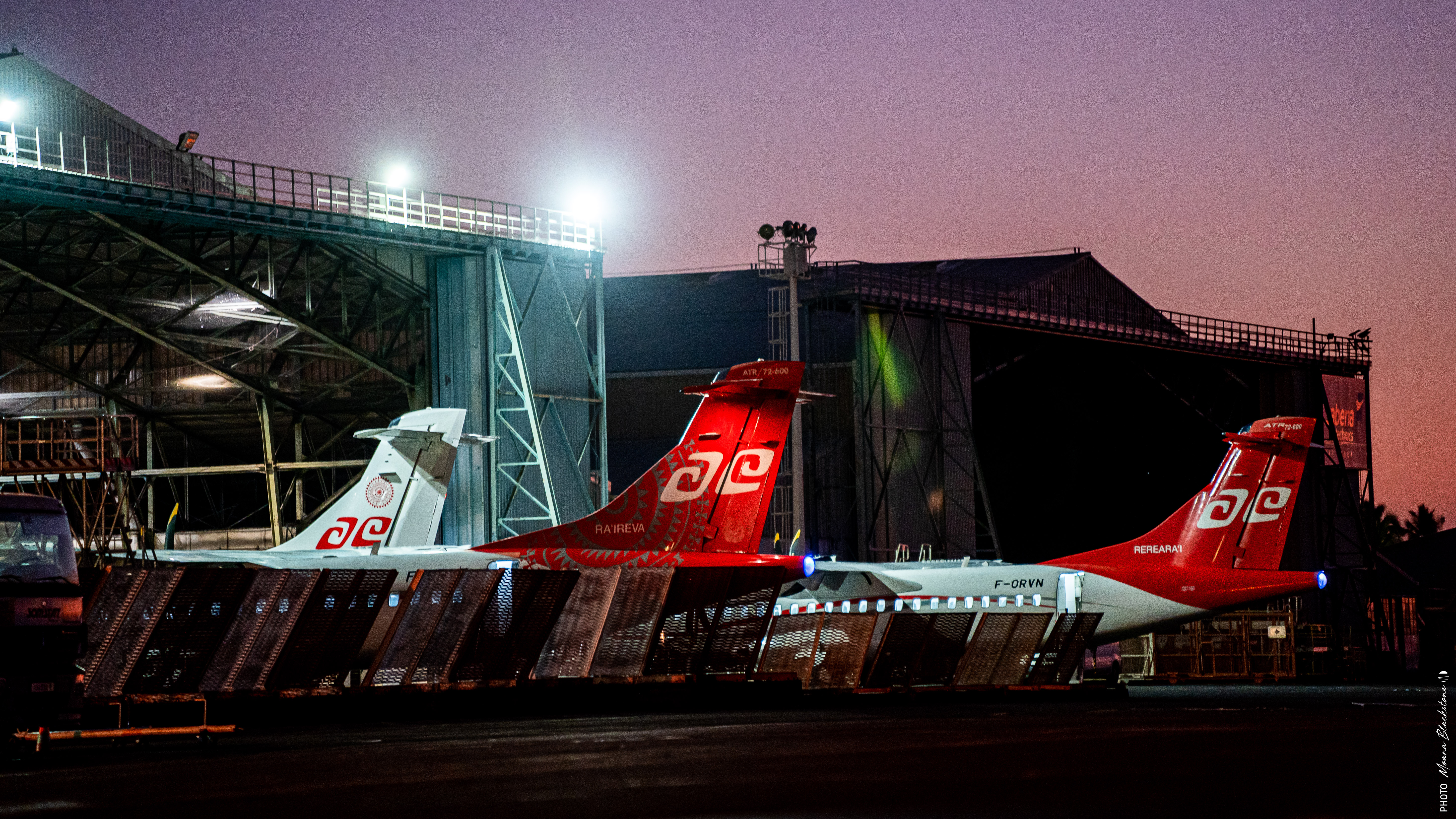
The 5 archipelagos of French Polynesia are primarily served by Air Tahiti through a regular flight program from Tahiti-Faa’a to around forty destinations, thus enabling the opening up of remote islands from Tahiti. More recently, Air Moana has also started serving 6 destinations in 3 different archipelagos.
Aéroport de Tahiti manages the airports of Bora Bora, Raiatea, and Rangiroa on behalf of the Government under Temporary Occupation Permits until June 30, 2025.